What happened
Olbers' Paradox poses a fascinating question: if the universe is filled with stars, why does the night sky appear dark? This conundrum has intrigued astronomers and thinkers for centuries. The resolution lies in the nature of light and the vastness of space. As light travels across the universe, it can become red-shifted, meaning its wavelength stretches and its color changes. This red-shifting, along with the finite age of the universe and the expansion of space, contributes to the darkness we observe at night.
Can you see it?
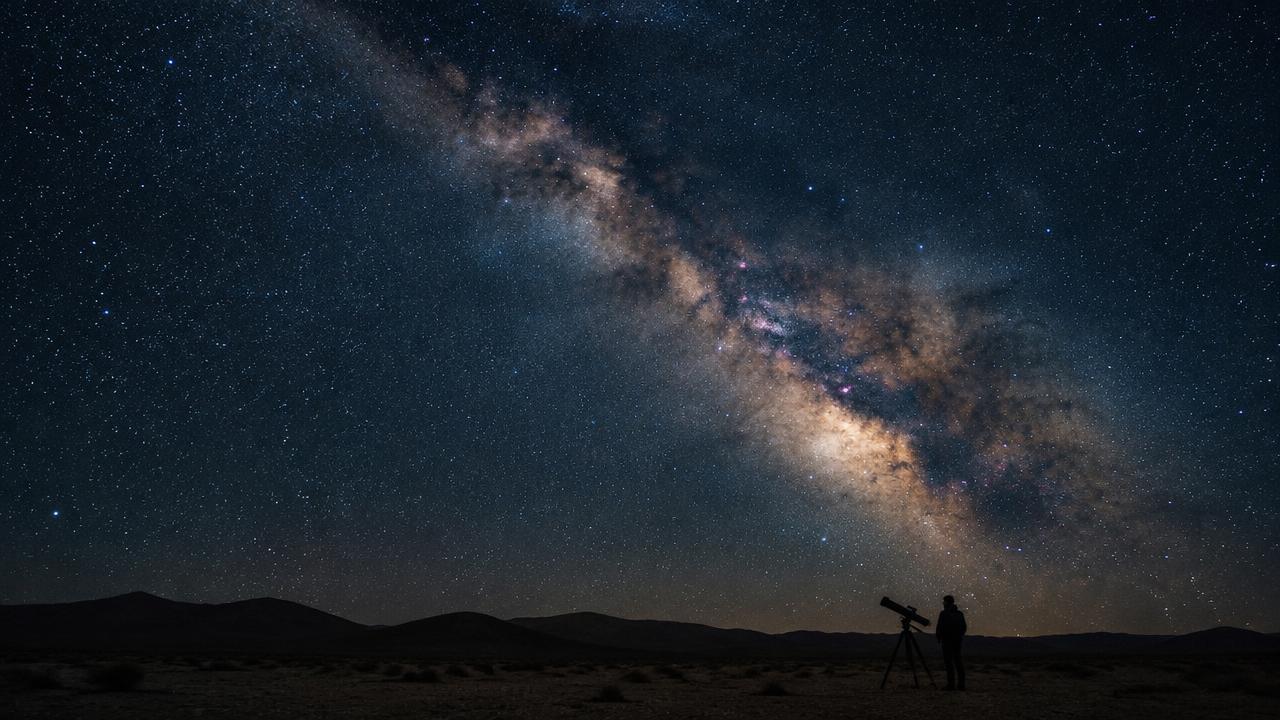
While Olbers' Paradox itself is a theoretical concept and cannot be directly observed, it invites you to reflect on the cosmos during your stargazing outings. On clear nights, you can see thousands of stars scattered across the sky. The Milky Way, with its dense star fields, is a vivid reminder of the universe's riches. Use binoculars or a small telescope to explore star clusters or distant galaxies, but remember, the vastness of space means that even with the best equipment, many stars remain unseen, contributing to that dark backdrop.
What it means for your nights out
Understanding Olbers' Paradox can deepen your appreciation for the night sky. Each star you see is a glimpse into a universe that is both beautiful and enigmatic. When you gaze up, consider not just the stars that shine, but the vast spaces in between and the light that has traveled eons to reach you. This perspective can transform ordinary stargazing into a profound experience, reminding you of the mysteries and wonders of the cosmos.
Originally reported by EarthSky. This summary was written by Dark Sky Guide.