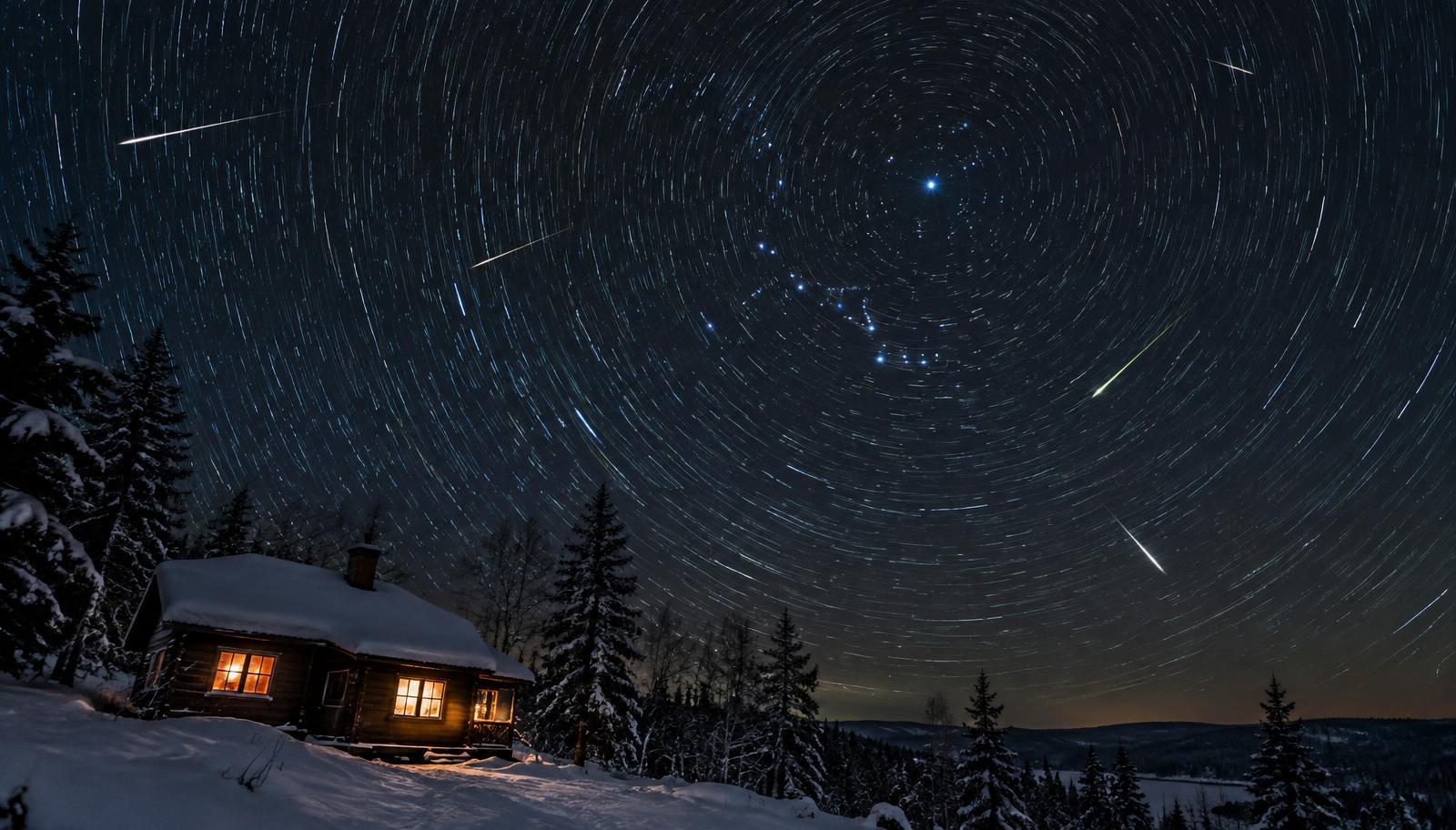
Where to watch the 2026 Ursid Meteor Shower near Victoria
A 98% lit moon will wash out the fainter meteors of Ursid Meteor Shower.
The short answer
Ursid Meteor Shower peaks on Tuesday, December 22 near Victoria. Expect about 0 hours of moon-free darkness, with astronomical twilight ending at 6:16 PM and returning at 6:08 AM. The moon is 99 percent lit, so moonlight will wash out fainter meteors. At 12:12 AM the radiant sits 39 degrees up in the north-northeast. Under ideal dark skies the shower can produce up to 10 meteors an hour.
| Peak (local) | Tuesday, December 22 at 2:54 PM PDT |
|---|---|
| Sunset | 5:21 PM |
| Fully dark | 7:16 PM to 7:08 AM |
| Dark hours | 0.0 h |
| Moon | 99% lit · rises 4:47 PM, sets 9:10 AM |
Questions people ask
What is the best time to watch the Ursid Meteor Shower near Victoria?
The Ursid Meteor Shower peaks on Tuesday, December 22 at 1:54 PM. However, the best time to observe will be after sunset at 4:21 PM, with the sky fully dark from 6:16 PM.
Where are the best places to watch the Ursid Meteor Shower in Victoria?
Some great spots to watch the Ursid Meteor Shower include East Sooke Park, Aylard Farm, and the Dominion Astrophysical Observatory. These locations are known for their darker skies, which can enhance your viewing experience.
What is the moon situation during the Ursid Meteor Shower?
The moon will be 99 percent lit during the Ursid Meteor Shower, which means it will wash out fainter meteors. Unfortunately, there are no moon-free dark hours for this event, so be prepared for bright moonlight.
Which direction should I look to see the meteors?
To catch the Ursid meteors, look towards the north-northeast. The radiant point of the shower will be at an altitude of 39 degrees at around 12:12 AM.
What should I bring or expect while watching the Ursid Meteor Shower?
Bring warm clothing, a blanket or reclining chair, and perhaps some snacks and drinks for comfort. Expect to see about 10 meteors per hour under ideal conditions, though the bright moon may hinder visibility.


