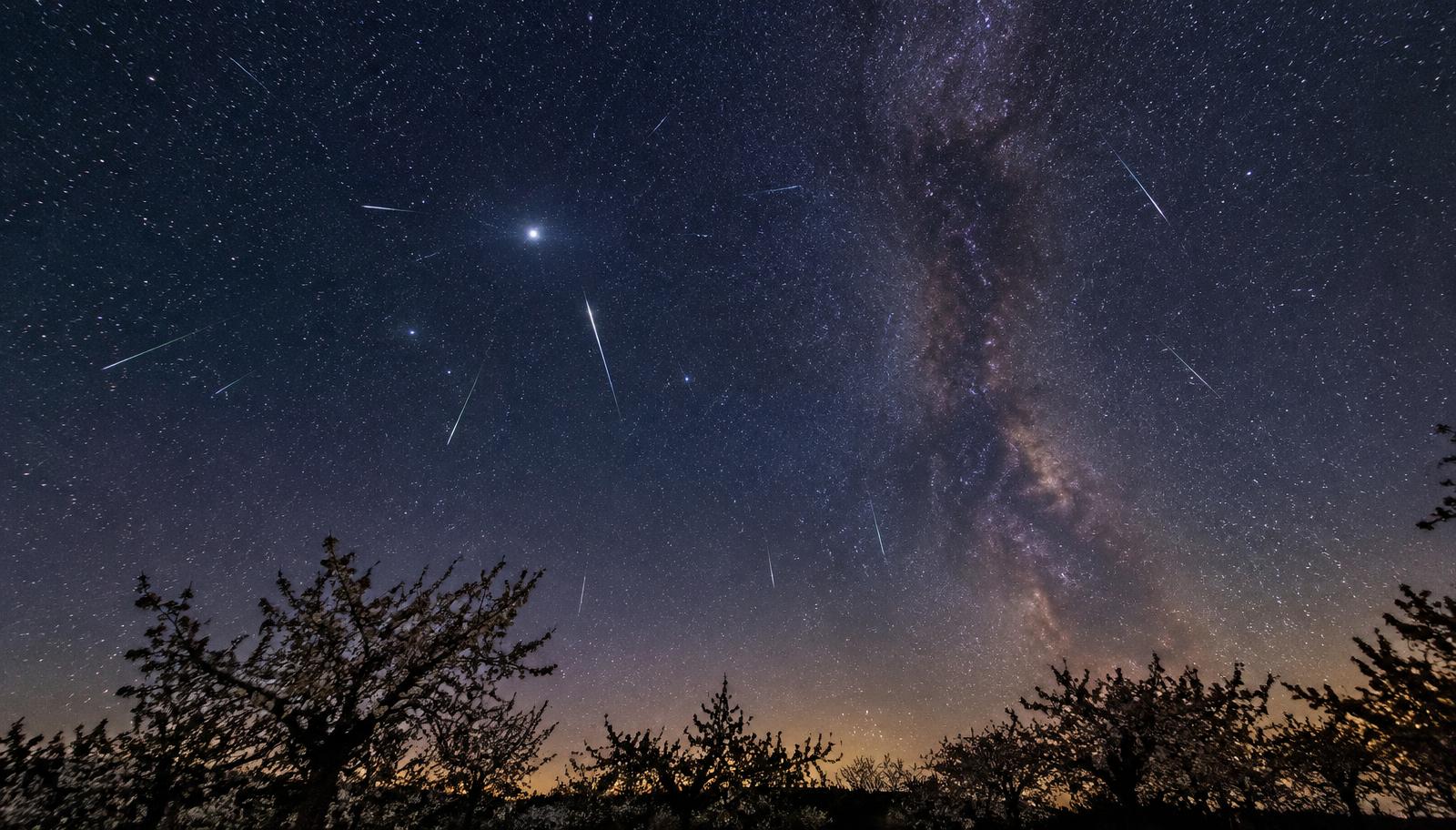
Where to watch the 2027 Lyrid Meteor Shower near Vancouver
A 95% lit moon will wash out the fainter meteors of Lyrid Meteor Shower.
The short answer
Lyrid Meteor Shower peaks on Thursday, April 22 near Vancouver. Expect about 1 hours of moon-free darkness, with astronomical twilight ending at 10:22 PM and returning at 3:58 AM. The moon is 94 percent lit, so moonlight will wash out fainter meteors. At 1:10 AM the radiant sits 44 degrees up in the east. Under ideal dark skies the shower can produce up to 18 meteors an hour.
| Peak (local) | Thursday, April 22 at 6:38 PM PDT |
|---|---|
| Sunset | 8:15 PM |
| Fully dark | 10:22 PM to 3:58 AM |
| Dark hours | 1.0 h |
| Moon | 94% lit · rises 11:11 PM, sets 6:57 AM |
Questions people ask
What is the best time to watch the Lyrid Meteor Shower near Vancouver?
The best time to watch the Lyrid Meteor Shower is after 10:22 PM when it becomes fully dark. The peak of the shower occurs around 1:10 AM, so this is when you can expect to see the most meteors.
Where are the best places to observe the meteor shower near Vancouver?
Some great spots to watch the Lyrid Meteor Shower include Golden Ears Provincial Park and Cypress Mountain Highview Lookout. These locations offer darker skies, which enhance your viewing experience.
What is the moon situation during the Lyrid Meteor Shower?
During the Lyrid Meteor Shower, the moon will be 94 percent lit, rising at 11:11 PM. This means that there will only be about one hour of moon-free darkness, so be prepared for some moonlight washing out fainter meteors.
Which direction should I look to see the meteors?
You should look towards the east to see the radiant point of the meteor shower, which will be at an altitude of 44 degrees. This is where the meteors will appear to originate from.
What should I bring or expect for a good viewing experience?
Bring a blanket or reclining chair for comfort, as well as warm clothing and snacks to keep you cozy during the wait. Expect to see about 18 meteors per hour under ideal conditions, but remember that the moonlight may wash out some of the fainter ones.


